Manifa Travel is a travel destination and adventure tour management company from Luang Prabang, Laos

📢 お知らせ:ルアンパバーン主要観光地の入場料改定について 🇱🇦
ルアンパバーンへご旅行を計画中の皆様にお知らせです!ルアンパバーン県の情報文化観光局より、外国人観光客向けの主要観光地の入場料改定が発表されました。新しい料金は2026年11月15日より適用されます。
改定後の新しい入場料は以下の通りです:
🏛️ ルアンパバーン国立博物館(王宮博物館)
200,000 キープ (約 8.90 USD)
💦 クアンシーの滝
100,000 キープ (約 4.40 USD)
⛰️ プーシーの丘
60,000 キープ (約 2.70 USD)
🛶 パークウー洞窟(タムティン)
60,000 キープ (約 2.70 USD)
🛕 ワット・ビスンナラート
60,000 キープ (約 2.70 USD)
🛕 ワット・シェントーン
60,000 キープ (約 2.70 USD)
※米ドル(USD)表記は現在の為替レート(1 USD ≈ 22,500 LAK)に基づいた概算額です。現地のチケット窓口では現金(ラオスキープ)での支払いが必要になるため、事前にご準備ください。
世界遺産の街、ルアンパバーンでの素晴らしい旅をお楽しみください!✨
#ルアンパバーン #ラオス旅行 #ラオス観光 #入場料改定 #お知らせ #世界遺産
... See MoreSee Less
0 CommentsComment on Facebook


+
🚤 Luang Prabang ↔ Nong Khiaw: Make the journey part of your adventure!
Travelling solo in Laos this high season? We have good news!
From 1 November 2026 to 5 March 2027, BOTH of our one-way river tours will accept bookings for just ONE person—down from our usual minimum of two people per booking.
Two directions, two different experiences:
🌿 LUANG PRABANG → NONG KHIAW
River Cruise, Village Visit & Waterfall Hike
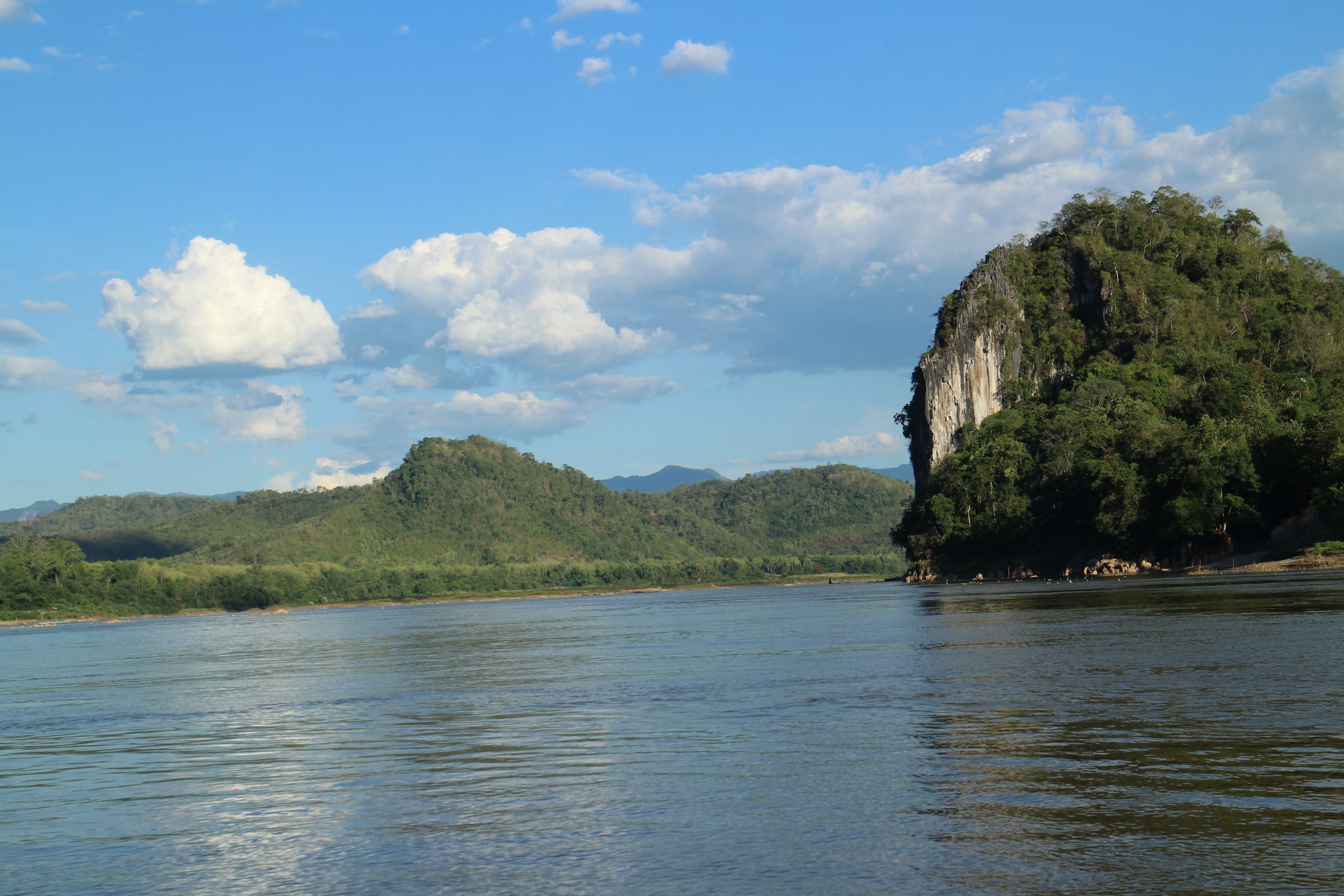
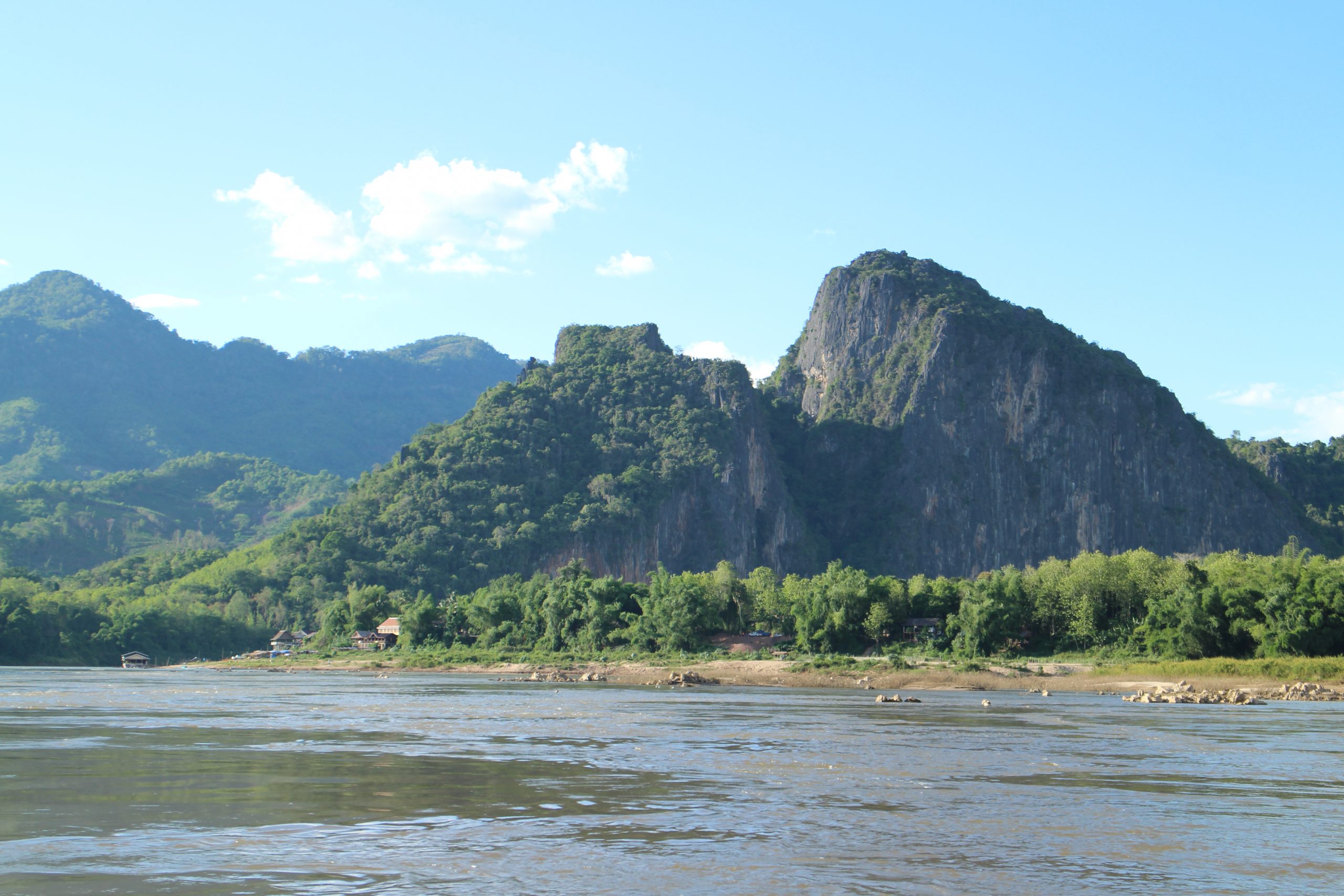
Travel from Luang Prabang by road to the Nam Ou River, then board a boat for a scenic journey upstream through limestone mountains and riverside countryside.
Enjoy a Lao lunch on board, visit a local village, and join a guided hike to the 100 Waterfalls. Then relax on the boat as you continue towards Nong Khiaw in the evening.
Here’s what our guests loved:
⭐ “A wonderful way to get to Nong Khiaw!”
— Shannon, United Kingdom · May 2026
⭐ “The whole boat ride was non stop views.”
— Lyn, Italy · October 2025
⭐ “Our guide Nick was amazing!”
— Laura, Singapore · December 2025
👉 Explore the itinerary & book directly:
https://manifatravel.com/trip/…
🌅 NONG KHIAW → LUANG PRABANG
Nam Ou & Mekong River Cruise
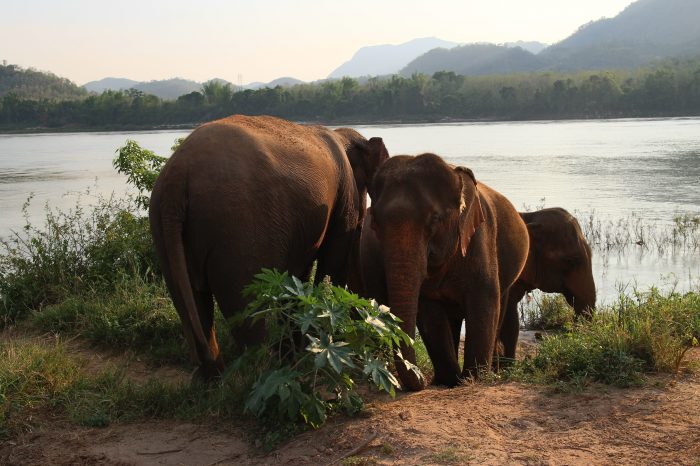
Start your day cruising down the Nam Ou, surrounded by mountain scenery. After a connecting road transfer, enjoy lunch at Manifa Elephant Camp before continuing your journey on the Mekong.
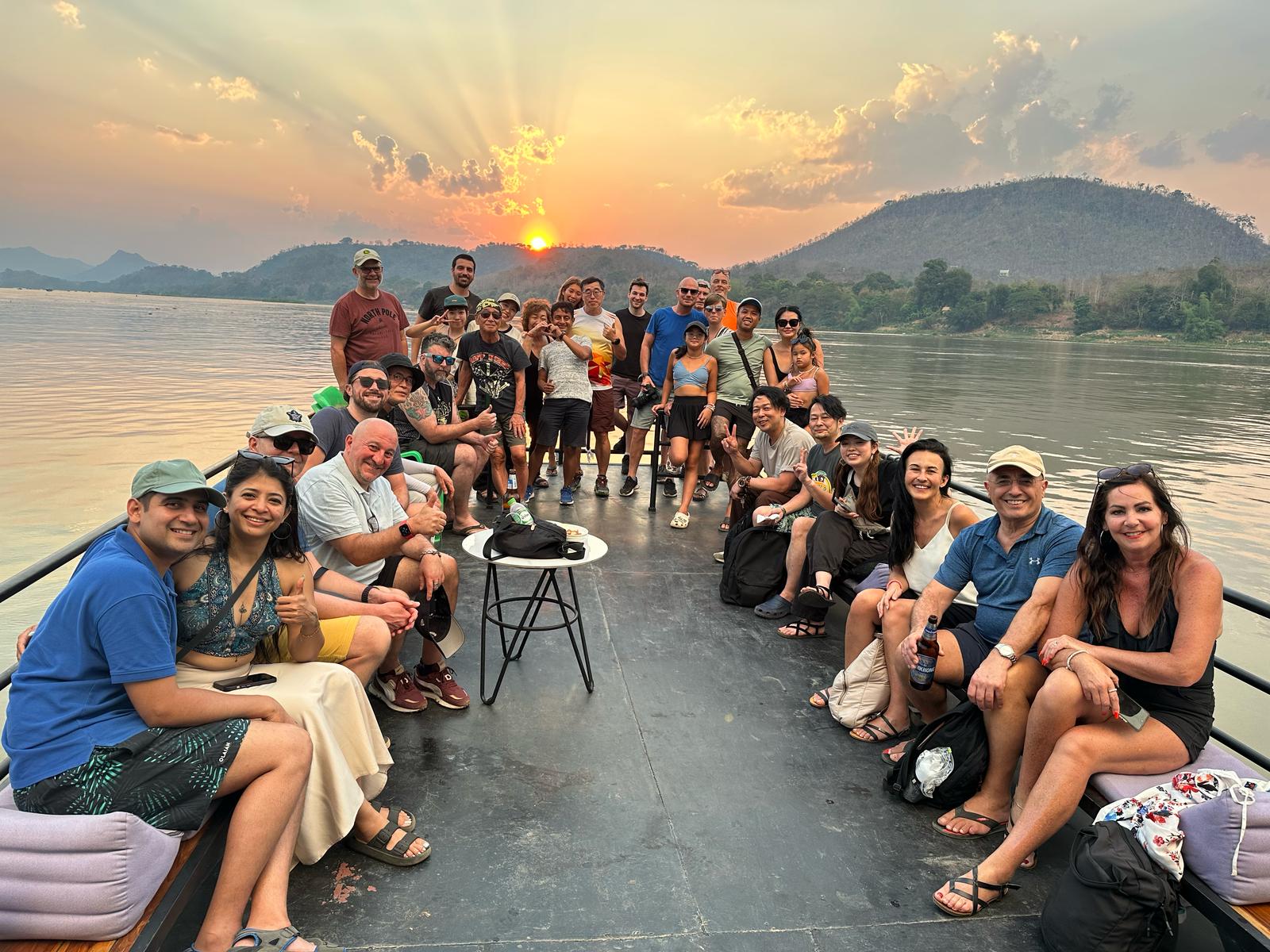
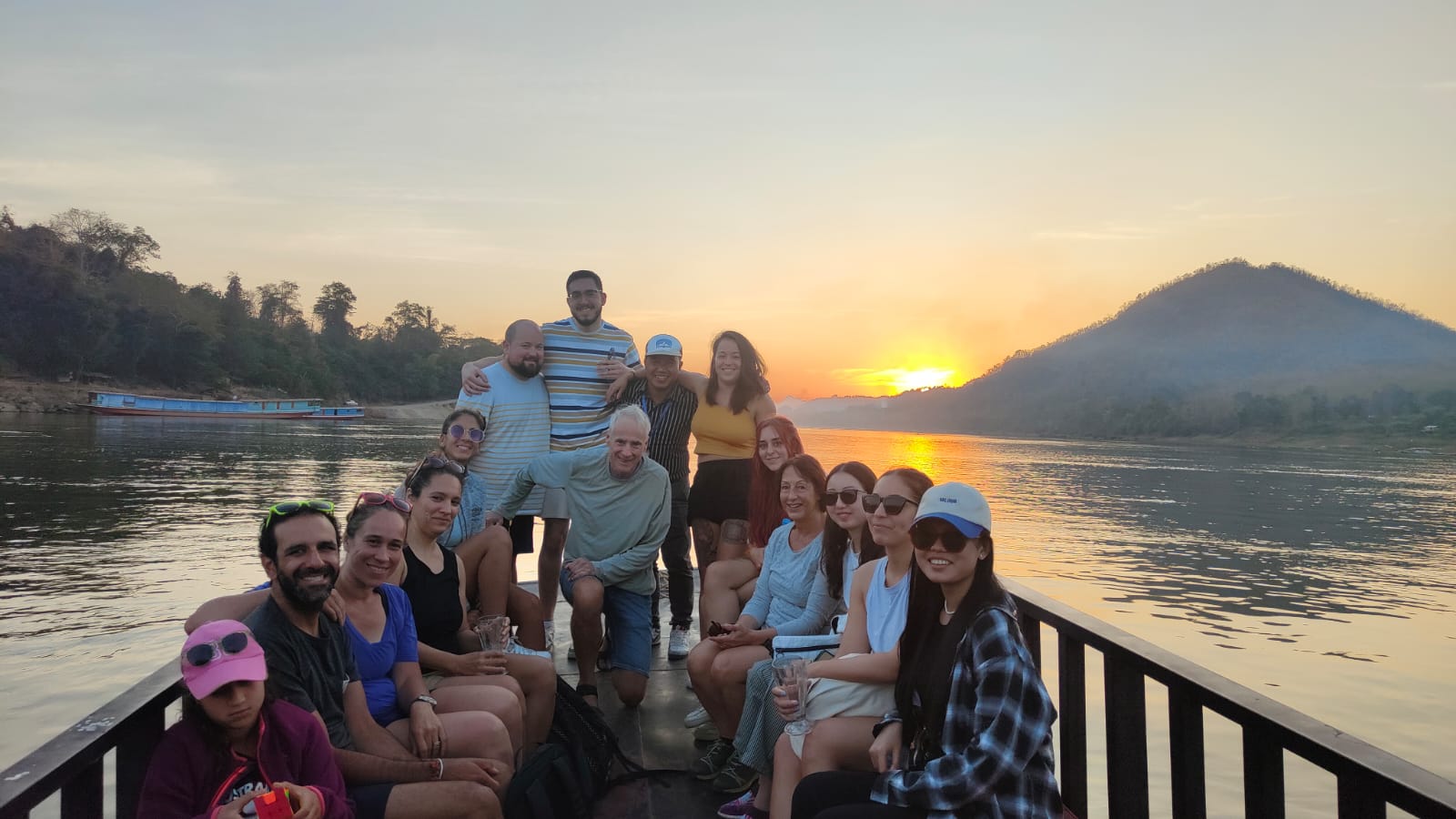
Visit the Buddha-filled Pak Ou Caves and the whisky-making village of Ban Xang Hai, then enjoy a sunset cruise towards Luang Prabang.
A few words from our guests:
⭐ “Absolutely fantastic way to go from Nong Khiaw to Luang Prabang!”
— Vincenzo, United Kingdom · May 2026
⭐ “the cave is amazing.”
— Isabelle, France · February 2026
⭐ “The Sunset cruise was superb.”
— Karen, United Kingdom · February 2026
👉 Explore the itinerary & book directly:
https://manifatravel.com/trip/…
🎒 Bring your luggage and travel onwards—or book both routes around a stay in Nong Khiaw to enjoy a different journey in each direction.
Both are full-day, one-way tours combining boat travel and road transfers, with an English-speaking guide, lunch and drinking water included. Accommodation is arranged separately.
Solo travellers, couples and friends—all welcome. See you on the river!
#ManifaTravel #LaosTravel #NongKhiaw #LuangPrabang #SoloTravel #RiverCruise
... See MoreSee Less
0 CommentsComment on Facebook


+7
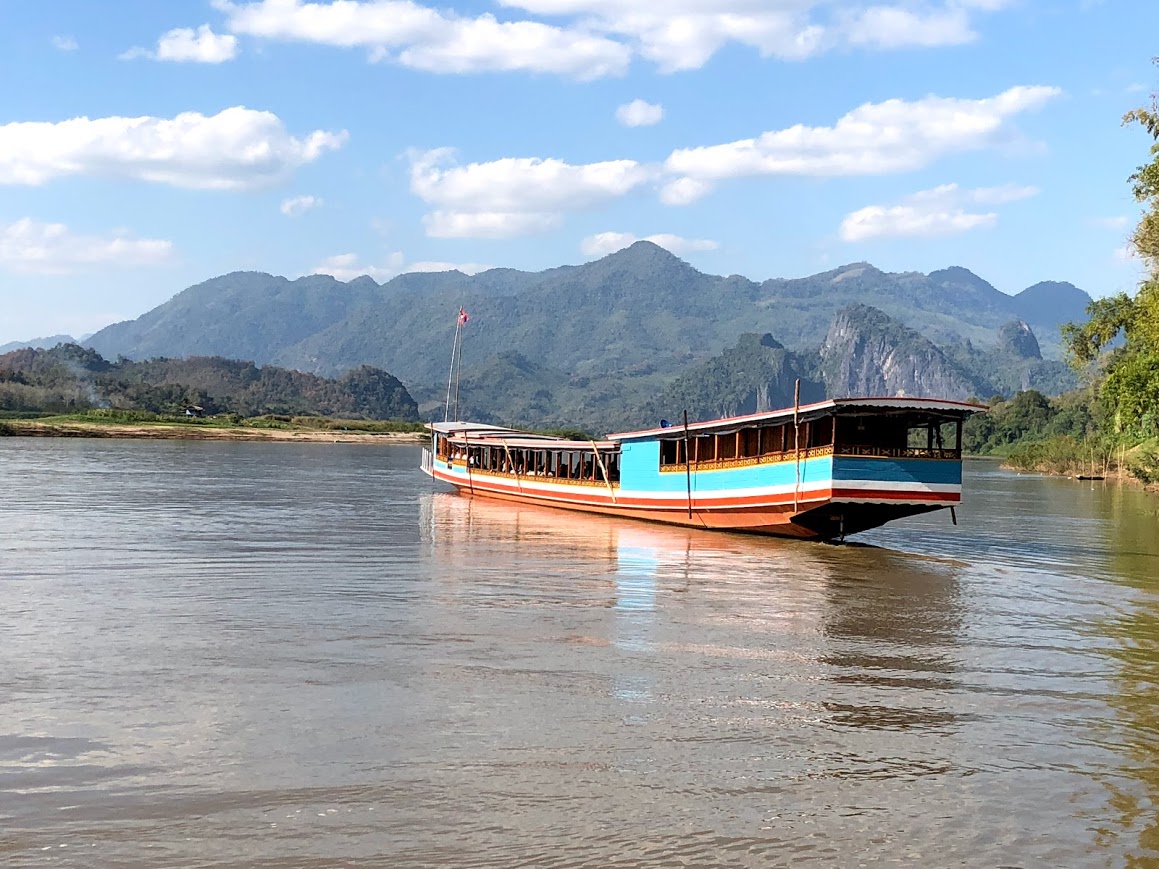
Summer in Luang Prabang has a special kind of beauty. After the rain, the sky clears, the landscape glows in fresh shades of green, and a refreshing breeze drifts across the river.
At Manifa Travel, we operate three cruise boats every day:
🚤 Luang Prabang ⇄ Pak Ou Caves: https://manifatravel.com/destinations/…
🚤 Luang Prabang ⇄ Kuang Si Falls: https://manifatravel.com/destinations/…
🚤 Nam Ou Dam 2 ⇄ Nong Khiaw:
More than simply a way to travel, each cruise offers a peaceful opportunity to enjoy the lush riverside scenery, quiet villages, and everyday life along the water.
These river journeys are incorporated into a variety of our tours, making Manifa Travel’s itineraries truly unique.
Come aboard and experience the clear skies, cool breeze, and tranquil beauty of summer in Luang Prabang—from the best seat on the river.
#ManifaTravel #LuangPrabang #RiverCruise #PakOuCaves #KuangSiFalls #NongKhiaw #LaosTravel #VisitLaos
... See MoreSee Less
1 CommentsComment on Facebook
【The “Rescued Elephant” as a Tourism Product: What Human Welfare Teaches Us About Protecting Relationships】
“This elephant was rescued” creates a story that tourists can immediately understand. There was a life before rescue, an institutional intervention and a happier life afterwards. Visitors receive more than an opportunity to see an elephant. They are also offered the feeling that their admission fee or donation has allowed them to participate in an act of rescue.
There are circumstances in which an elephant genuinely needs to be moved and protected—for example, when an owner can no longer continue providing care, following an accident or disaster, after confiscation from illegal trade, or because urgent medical treatment is required. The problem is not the word rescue itself. It begins when the term is applied indiscriminately to ordinary purchases, rentals and transfers of ownership and becomes a permanent tourism product.
Accounts of elephant tourism in Southeast Asia often begin with logging prohibitions that left many elephants and mahouts without work. In Thailand, for example, the 1989 logging ban created a serious employment crisis.
Today, however, we are no longer in that immediate period of transition. Many elephants moving between venues already live within established arrangements connecting villages, mahout families, owners and tourism camps. An elephant living with a mahout in a village, or residing at another elephant camp, cannot be designated a rescue case solely because of its location.
Transfers between venues may involve a purchase, a change of ownership or a rental agreement. A mahout may also work at a camp with an elephant that the mahout owns. A transfer can change access to land, food or veterinary treatment, but a change in owner or workplace does not by itself prove that the elephant’s former life required rescue.
Calling every transfer a rescue creates a clear division between “before” and “after.” Families and mahouts who raised the elephant and accumulated knowledge of that individual recede into the background. The receiving institution can then appear to be the sole author of the elephant’s present wellbeing.
A business that makes the “rescued elephant” its principal brand also faces a structural problem: maintaining visitors, donations and publicity may require a continuing supply of new rescue subjects. In emergency protection, the disappearance of the need for rescue would represent success. When rescue becomes the product, fewer subjects of rescue can also mean a shortage of the story on which the business depends.
This problem becomes easier to understand when compared with specific examples from human welfare. The comparison does not equate children with elephants. It identifies a shared institutional structure: the protected subject is separated from surrounding relationships, and transfer to an outside institution is presented as rescue.
■ Australia: separation “for their own good”
In Australia, governments, churches and welfare bodies forcibly removed Aboriginal and Torres Strait Islander children from their families. Children were placed in institutions or non-Indigenous homes and lost connections not only to parents but also to language, culture, community and Country.
Removal was justified as providing children with education and better lives. Outside institutions, however, treated relationships they did not adequately understand as obstacles to the children’s wellbeing.
This history demonstrates that improving a protected subject’s life is not identical to separating that subject from existing relationships. A receiving institution may possess more money or infrastructure, but this does not automatically make previous relationships valueless.
■ The United States: a family problem or a lack of support?
In the United States, shortages of stable housing, food, childcare or medical services resulting from poverty may be treated as parental neglect.
For example, public funds may be available to remove a child from a family facing eviction and place that child in foster care. If the underlying problem is housing rather than the family relationship itself, however, rental assistance or stable accommodation could improve the child’s life while preserving family ties.
Scholars such as Dorothy Roberts have therefore asked whether welfare should concentrate on rescuing children from families or on creating the conditions under which families can care for children safely.
A similar question applies to elephant care. If access to food, forest, veterinary support or stable mahout employment is limited, one option is to support the conditions under which the existing elephant–mahout relationship can provide better care. The existence of a relationship should not automatically be mistaken for the source of the problem.
■ Cambodia: tourism that requires rescue subjects
Cambodian orphanage tourism offers an even closer comparison. Overseas visitors and donors were attracted by opportunities to help children presented as orphans.
Yet a Cambodian government and UNICEF study found that at least 77 per cent of children in residential institutions had a living parent. Children sometimes entered institutions because of limited educational opportunities or household economic conditions. These complicated family circumstances became largely invisible to tourists, who encountered the child as a rescued orphan.
Supporting education and livelihoods within a family is difficult for visitors to see and does not create a dramatic rescue scene. A child inside an institution, by contrast, can be made visible through visits, photographs and donations. Well-intentioned funding could therefore help sustain a system that placed children in institutions even when family-based care remained possible.
This is the closest parallel with elephant tourism. The more the “rescued elephant” attracts visitors and donations, the more a venue may depend on the continuing availability of rescue subjects. Elephants living in villages or at other camps may be seen as future rescue candidates before their individual lives have been understood.
The three human-welfare examples offer different lessons.
Australia demonstrates that separation presented as being in someone’s best interests can still destroy essential connections to family, culture and place.
The United States demonstrates the need to ask whether a problem lies in the caregiver or in the material and institutional conditions under which care must be provided.
Cambodia demonstrates how tourists’ and donors’ goodwill can create an economy that continually requires visible subjects of rescue.
All three show that when attention is focused exclusively on the protected individual, the relationships, knowledge, communities and living conditions that sustain that individual can disappear from view.
Knowledge passed down through generations within mahout families, and further refined through many years spent with one particular elephant, is not a tradition rendered obsolete by modern animal-welfare science. It is indispensable to good welfare. It enables the continuous observation that sustains an elephant’s daily health and wellbeing.
A mahout follows the appetite, gait, dung, sleep, temperament, social responses and seasonal changes of a particular elephant over time. Animal-welfare science contributes health indicators, veterinary diagnosis and standards that can be shared across institutions. Mahout knowledge contributes a long-term, individually specific baseline for one elephant. These are not competing forms of knowledge. They complement one another.
Protecting an elephant therefore does not mean extracting it from relationships and presenting it as an isolated rescued individual. It means being transparent about purchases, rentals and transfers, respecting knowledge carried by mahouts and supporting that knowledge with welfare science and veterinary medicine.
What deserves protection is not the isolated image of the “rescued elephant.” It is the relationship between elephant and mahout that sustains the elephant’s health and wellbeing every day.
References:
Elephant ownership and rental arrangements:
The Stolen Generations in Australia:
Separating poverty from neglect in the United States:
https://childwelfare.gov/topics/prevention/…
Dorothy Roberts, “Child Welfare and Civil Rights”:
https://illinoislawreview.org/wp-content/…
Residential care and orphanage tourism in Cambodia:
https://unicef.org/cambodia/media/…
#ElephantTourism #Mahouts #AnimalWelfare #ResponsibleTourism
... See MoreSee Less

manifatravel.com
If you are looking for an experience that prohibits all elephant riding and limits the human–elephant relationship to observation alone, Manifa may not be the right place for you.0 CommentsComment on Facebook
Make the journey from Nong Khiaw to Luang Prabang part of your holiday. Cruise through the limestone scenery of the Nam Ou valley and enjoy lunch at Manifa Elephant Camp beside the Mekong. Then choose between an afternoon of cruising, caves, and village discoveries, or a direct minivan transfer for an earlier arrival in Luang Prabang.
November 1, 2026 – March 5, 2027: Minimum number of booking: 1
July 21, 2025 – October 31, 2026, March 6, 2027: Minimum number of booking: 2
Please contact us if your group does not meet the minimum number of participants.
Meet at the Manifa Travel Nong Khiaw office, just off the bridge, at 9:30 AM. Boat pickup is also available for guests staying at riverside hotels.
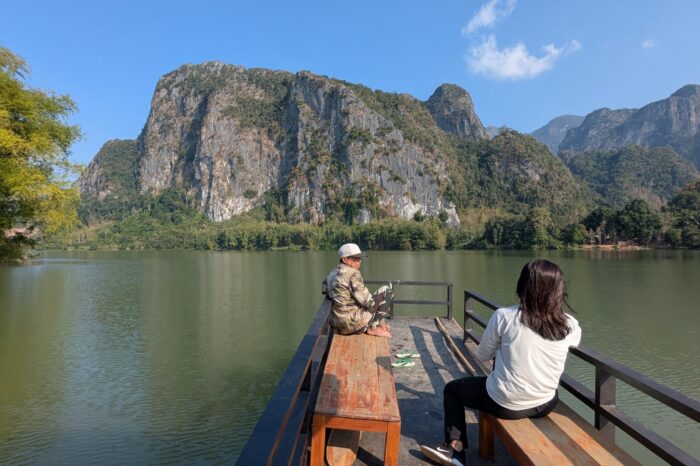
Board a boat for an approximately two-hour cruise downstream on the Nam Ou River. Watch limestone mountains, forested slopes, and riverside settlements pass by as you travel through the valley. This scenic journey offers time to enjoy the landscape from the water before continuing toward Luang Prabang.
Disembark at the Second Dam, where a minivan awaits to take you to Manifa Elephant Camp for lunch beside the Mekong River.
After lunch, continue your journey on the Mekong. Relax aboard the boat or choose to kayak to Pak Ou Caves, where the Nam Ou meets the Mekong. Kayaking is available for a minimum of two participants at no additional charge.
Both options include a visit to Pak Ou Caves, home to thousands of Buddha images overlooking the river. After exploring the caves, kayakers rejoin the main boat for the onward cruise.
Continue downstream and stop at a whiskey village, where traditional spirits are made from sticky rice. Then enjoy the changing light over the Mekong as you cruise toward Luang Prabang, with the chance to watch the sunset from the water.
Arrive in Luang Prabang just before 6:00 PM, followed by a transfer to your hotel. This option turns your travel day into a full day of river scenery, cultural visits, and a choice of relaxation or paddling.
After lunch at Manifa Elephant Camp, travel directly to Luang Prabang by minivan. The drive takes approximately 40 minutes, arriving at around 2:30 PM.
This option includes the morning Nam Ou cruise and riverside lunch, leaving you time to settle into your accommodation and enjoy the afternoon in Luang Prabang. It suits travelers who prefer a shorter day or have plans in town.
The direct-transfer option does not include kayaking, Pak Ou Caves, the whiskey village, or the afternoon Mekong cruise.
Please note: This is a one-way tour starting in Nong Khiaw and ending in Luang Prabang.
Right next to Nong Khiaw Bridge. Som Nang View Point, Nong Khiaw Manifa Travel office that also serves as the ticket office. Meeting time is 9:30AM. Most hotels are within walking distance. Hotels further away should be able to arrange a van or tuk-tuk to take you there. It’s a good idea to arrive at the meeting point early (1 hour in advance) and climb up to the viewpoint to watch the sunrise.
Alternatively, if you are staying at a riverside hotel, a boat pickup is available. Please enter your hotel name on the booking form.
Boat pier on Luang Prabang Peninsula (within walking distance to the main street where Luang Prabang Night Market is located) or any hotel or location in Luang Prabang within our designated area We can transfer you to your hotel in Luang Prabang city center after arriving at the pier. We cannot transfer to hotels outside the city center (such as The Namkhan or Hillside – Nature Lifestyle Lodge), so you will need to make your own arrangements for transportation (tuk-tuk, etc.).
You can bring your luggages with you on the tour. This applies to a standard amount of traveler’s luggage (the amount typically allowed by airlines for carry-on and checked baggage without extra fees).
Prices include credit card charges and are not subject to additional charges.
Cancellations (full refund) and date changes (if possible) can be made free of charge up to the day before
Adult (over 12 years old) $46 per person
Child Over 110cm tall and under 11 years old $36 per person
Free Child under 110 cm tall
Adult & Child $30 per person
Free Child under 110 cm tall
If you have any questions regarding this tour, please feel free to contact us.
To make a booking, please do not use this inquiry form; instead, click “Book Now” and use the form that appears.
This full-day tour combines a Luang Prabang city tour with an afternoon Mekong cruise to Pak Ou Caves. In the morning, you will visit various temples and royal palaces and learn about Lao history culture and local life. Walking with […]
Explore Luang Prabang with a flexible two-day shared tour package. Choose one full-day tour each day: Kuang Si Falls on Day 1 and Pak Ou Caves on Day 2, paired with your choice of cultural sights, rice farming, elephant experiences, cycling, or kayaking.
Journey from Luang Prabang to Nong Khiaw through the scenic Nam Ou valley. Enjoy a river cruise and village lunch, then choose a 100 Waterfalls hike or an earlier arrival without hiking.
Experience elephants in the morning. After lunch, visit Pak Ou Caves and Whiskey Village by boat. Return to Luang Prabang by sunset cruise.
© 2008-2025 MANIFA Group Sole Co.,Ltd